Showing posts with label degree. Show all posts

Monday, June 6, 2016

It's Been Real...but What's Next?

We have officially kicked off Spring Convocation week, Badgers! Congratulations to all who will be walking across that stage and entering a new chapter in their life. You've spent four years or so working towards getting into the field you love. Now that it's over, where do you go from here? Whether you are going on to pursue further education, travel the world, or go directly into your career, we want to help! 

Transitioning from university can be nerve-racking, overwhelming and stressful, but mostly, it should be exciting! The hard work you put in has paid off, so start with being proud of yourself. 

Although you may no longer be an undergraduate at Brock, you'll always be a Badger, and with being a Badger comes benefits. We value our alumni and want to ensure that you are provided with the necessary tools and resources to make the most of your degree. Our services are indeed still open to you and we are happy to assist with your next steps. As a New Graduate, some reasons you should stop by the Resource Centre are: 


  • Get Your Professional Documents Reviewed. You now have the skills and abilities to do the job, but making sure that you can showcase it in the best way possible on your resume, CV or cover letter will be a big factor in determining whether or not you land the position. 
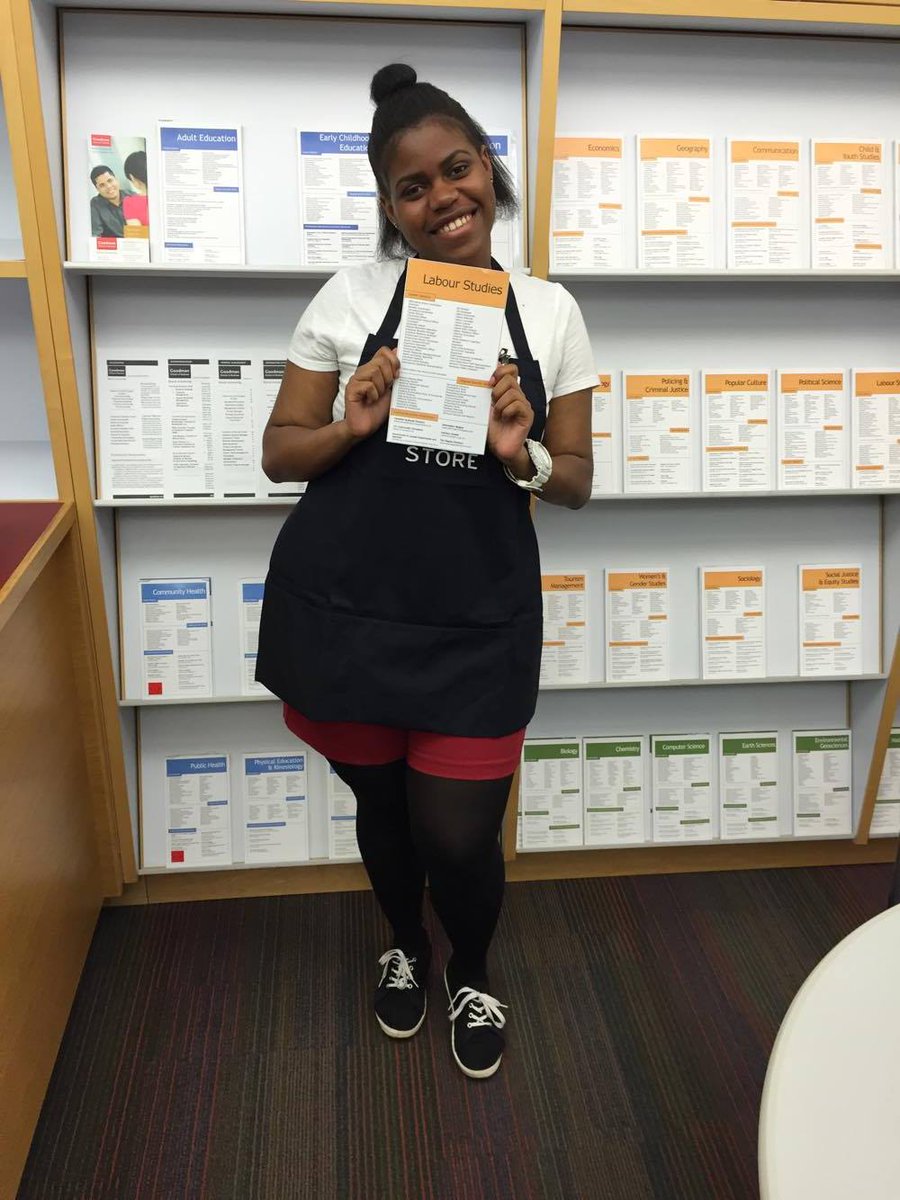
  • Pick Up a DEG. Degree exploration is something you'll do now more than ever. Come grab a Degree Exploration Guide for your program to look at possible career options and professional associations you could join!
  • Look Through our Going Abroad Resources. If travelling is something you are itching to do now that your undergraduate experience has come to an end, then be sure to look at our Going Abroad resources! Whether you want to teach in Korea or volunteer in Spain, we can help you figure out how to work your way around the world!
  • Careerzone. One thing you won't have to leave behind as a New Graduate, is Careerzone. This Brock exclusive job posting portal is still accessible to you, as long as you remember to set up your alumni account! Check it out for workshops and other resources as well.

Just because you are no longer enrolled as a Brock undergraduate, you are still part of the Brock community, and we are always happy to help. For those of you who are not local and are still interested in using our services, email us at career@brocku.ca, or message us directly on our Online Chat, accessible through the career services website. 

Time to take the next step into your future!

Lydia Collins
Senior Career Assistant 


Wednesday, May 18, 2016

Get Your D.E.G On!

Get excited everyone, because I know I am! Today we're going to take a trip to the great world of D.E.G. What exactly is a D.E.G, you ask? Well I'm here to tell you! A Degree Exploration Guide is one of our most popular resources here in the Centre, and tends to be incredibly useful for the students, alumni, and community members that we work with. There is a guide for each program that Brock has to offer, and they're even colour-coded according to faculty! These resources are used to allow individuals to further explore their career options based on their program. D.E.G's are generally broken down into seven sections: 

Career Options
here you can find various possible career paths based on the skills you've acquired from your program. If you're having trouble understanding which career would be best suited for you (like most of us,) then this section will surely be a step in the right direction!

Degree Specific Skills
This handy section allows you to understand which skills will be most desired by employers in your field of interest. Familiarize yourself with these to know what to highlight in your resume and cover letter in order to impress that potential employer! 

General Business Directories
Here you can see some of the most popular business directories. Depending on your program, they will vary, however there are quite a few that will be relevant regardless of your program.This includes www.yellowpages.ca and www.informationniaga.com to name a few! 

Internships and Volunteering
Interested in taking part in a volunteer or internship opportunity that is relevant to your program? Look no further! Here you are provided with links to various opportunities that will allow you to gain real-world experience doing what you love! 

Further Education and Entrance Exams
For many of us, formal education doesn't stop after the undergraduate stage. For those who are interested in pursuing post-graduate degrees, this section will be helpful for you. It will provide you with entrance exam practice test resources and schools that offer your program. 
Professional Associations and Career Resources
Interested in being part of a professional association? Many of these are free to join and can be found easily online! This D.E.G section provides you with various professional associations in your field! 

Job Search Resources 
Under this section of the D.E.G you'll find links to various job searching sites, many of which will be specific to your field. This includes general job searching sites as well. Take a look!

Although they differ depending on the program, these are the general sections included on our D.E.G's. Whether you are interested in learning more about further education, job search information or are in need of exploring your career options, this handy resource will be useful for you! 
Lydia Collins
Senior Career Assistant 

Monday, January 18, 2016

What Can I Do With My Degree?

“So you want to be a lawyer or the Prime Minister?” This is often the comment I get from people when I tell them I am a political science major. As someone who works in a Career Services department and who has no interest in entering politics or law this is an incredibly frustrating statement. For those of us in the social sciences and humanities, we and society in general often minimize our job prospects to the handful of well-known careers in our respective fields. For instance, those in psychology may believe that they can only be psychologists. Those in history may believe they can only be historians, archaeologists, or archivists. Those in English may believe they are on a path to becoming authors. For those like me in political science, we often assume our degree will lead to a life of long hours, travel and scandal as politicians or as a lawyer. 

We seem too focused on jobs that incorporate the knowledge we gain in our degrees. This may be the case for those in other faculties and science/math based programs. For instance, most students in the Faculty of Education want to become teachers, while many people in the nursing program have ambitions to become nurses or healthcare providers. However, for those of us in the social sciences and humanities, our job prospects are not as cut and dry and for many of us, we have no idea what we want to do after we graduate. Adding to this frustration of seeing those in other programs know what they want to do, the countless “studies” and articles written about degree career prospects all show that we as social science and humanities students are doomed to be unemployed after graduation and suffer a lifetime of under-employment. What is the purpose then of our degree? Did we waste all our money and time? Short answer - NO!

A popular question we get as Career Assistants in the Resource Centre is “what can I do with my degree?” To this I often ask if they know who Martin Dempsey is. Dempsey is a US General and former Chairmen of the Joint Chiefs of Staff reporting to the Secretary of Defence and the US President. As one of the highest ranking military officials in the United States, Dempsey holds a Master’s degree in Literature from Duke University where he wrote a thesis on Irish literature. Dempsey serves as a great example of someone who had a meaningful and successful career outside the "traditional jobs" English majors occupy. Like Dempsey, we must look beyond the information we learn throughout our degree and look more broadly at how we learn and engage with course material in order to better understand a) the skills we can bring to an employer and b) the endless job possibilities available to us. 

Instead of knowledge, those of us in social sciences and humanities should focus on transferable skills. Organization, teamwork, communication and leadership are all transferable skills that we gain throughout our undergraduate degree and are invaluable in any workplace. We gain these broad transferable skills by attending lecture and recording notes, preparing and presenting in seminars, researching and writing papers, and so on. Aside from these broad transferable skills your program may focus on more specific transferable skills. A full list of degree specific skills can be found on our degree exploration guides. By thinking outside the "traditional jobs" of our fields and focusing on the transferable skills we gain throughout our degree, those of us in the social sciences and humanities will find that a diverse selection of jobs and industries are available to us. While jobs directly related to our degree may be hard to come by, our degrees give us the skills we need to succeed in other job categories. 

Don’t be tied down to the restrictive list of traditional jobs for your field, think outside the box and DO NOT give too much weight to the studies that underestimate your degrees worth. Every degree and graduate is unique and can bring something to an employer. Stop by the Career Resource Centre in the Learning Commons and let us help you realize your degree’s value and job prospects. 


Mike Pratas
4th Year Political Science Major
Lead Career Assistant 

Tuesday, November 11, 2014

Degree exploration... don't forget the bigger picture!

During the middle of the semester I always catch myself thinking "What am I doing all this work for?". After writing midterms and finishing assignments, the stress can cause you to doubt what you've been working for. A lot of students have been coming in asking about what they can do with their degree simply because they need encouragement to get them through the rest of the semester.

As much as it can become hard to keep pushing through assignments and exams at this point, it is important to know that you are doing all of this work for a reason. You are becoming educated in a field that holds opportunity for the rest of your life. The skills you learn not only from your textbooks but also from you balancing your work are crucial to your success in your future career. You will be able to take on bigger jobs and more stress if you handle it day by day like you have been doing throughout school.

Through every discipline, you can find opportunity. Your drive, persistence, and effort is what will get you that job. Those are the things you learn without realizing when you are working through midterm or exam season. We learn to get through harder and harder exams that produce higher stress levels as we approach graduation. As we accomplish every term, we actively are creating a more innovative individual. As we work through our degree we not only learn the things we need to know about our field but we learn things that apply to the bigger picture or the working world as a whole. Teamwork, communication, conflict resolution, etc. are all the things we learn in every discipline that are connected to real jobs out there. These are the things that can make a successful future.

So, as you are thinking about your degree and the stress of that next assignment, remember that you are doing all of this for a great reason. You are working through this to improve those skills we don't always think about that are crucial in the job market.

If you are concerned about your degree or direction into a career, feel free to come by the Career Resource Centre to talk to a Career Assistant about it.

Wednesday, July 30, 2014

Resource Review: Degree Exploration Guides

Have you ever been confused about what you're going to do with your degree or why you are studying  so hard right now? Some students feel overwhelmed in their second or third year about what they will end up doing at the end of their degree. People worry about finding employment  and sometimes feel like they need to switch programs or degrees in order to meet the demands of the job market. Something I always ask students when they approach the Resource Centre with these issues is to think about why they chose this route, why they enjoy what they study, and lastly why they would want to change what they enjoy just because it may be a bit harder to find a job?

In order to calm them down and reassure them that there are many opportunities for every area of study, we have the Degree Exploration Guides (DEGs). These lovely cards are a run down of what "Career Options" you have (not all are listed but their is just enough variety for the student to see that there are many options). They also include "Degree Specific Skills" that can be talked about in the students resume and cover letter. These skills help explain why a person from a certain degree could fit into different roles and professions other then the obvious ones.

The DEGs also include web links to Professional Associations, Job Search Resources, Internships and Volunteering. After these have been explored by the student they become even more reassured about the opportunities that are really out there. Sometimes it is just a matter of opening your eyes and thinking more about what skills you have learned from studying your degree (such as time management, organization, communication, etc.)  and not necessarily every bit of content you were taught. Below is an example of of Degree Exploration Guide with the Child and Youth Studies degree.


If you are wondering what you are going to do with your degree or would like resources to help you find opportunities visit our website to look at all the different DEGs we have or come into the Resource Centre to talk to a Career Assistant about the DEGs! :)

Wednesday, June 25, 2014

Dear first years, don't limit yourself to the one career outlook!


As I am sitting in the Career Resource Centre in the middle of summer break, I am starting to see the faces of new students walking around the school. Most of them seem excited, but they also seem to be feeling nervous and don't know exactly where to start. I would like to tell them that there is nothing to be afraid of and that you don't have to make huge decisions yet, so enjoy the time that you have now. 

When picking your courses for first-year, don't have just one career outlook on your radar. Do what you love! Take classes that interest you and take full advantage of those elective credits. A lot of students will pick a degree and then not even want to continue after they have found something else they truly enjoy doing. In highschool we are forced to make these decisions that alter the rest of our life, and it's not your fault if you thnk you chose the wrong path. It's a whole other ballgame when you finally get to sit in the seminar and lecture rooms. You will know if you want to be there or if you'd rather still be in bed.  

Don't let anyone pressure you into doing something you don't really want to do. You don't want to waste this time learning about something you've decided isn't for you. Also, don't have just one thing in mind. You may not even be aware of the possibilities your degree offers. Most importantly, visit your Career Services department at your school, they are there to help you make these decisions and guide you into a career.  

Alysha-Lynn Kooter, Career/Graphics and Promotions Assistant, 3rd Year Education and Visual Arts